Club Member Astro Image Gallery
Several Astronomy Club of Asheville members enjoy photographing what they see through their telescopes, and a few capture pictures without the use of telescopic equipment at all. Most of these photos were shot using long exposures, so they display much more detail than our eyes alone can see through the telescope. We hope you enjoy this selection of astrophotography and nightscape images taken by our talented club members.
Click any image to see larger views in a slideshow.

NGC 7331 with supernova SN 2026aaiv. It lies about 43 million light years from Earth in the constellation Pegasus. Photo by club member Don Alm.

IC5146, the Cocoon Nebula, located some 2,500 light years distant in the Constellation Cygnus. The Nebula itself is some 15 light years in diameter; the bright star at its center is a massive type B approximately 15 times the mass of our sun and 20,000 times more luminous! Its radiation ionizes the hydrogen gas surrounding it giving the emission nebula its characteristic red color. Photo by club member Shaun Finney.

Star trails over the Richland Balsam Overlook at the highest point on the Blue Ridge Parkway. Composite of 200 images by club member Simone Lipscomb.

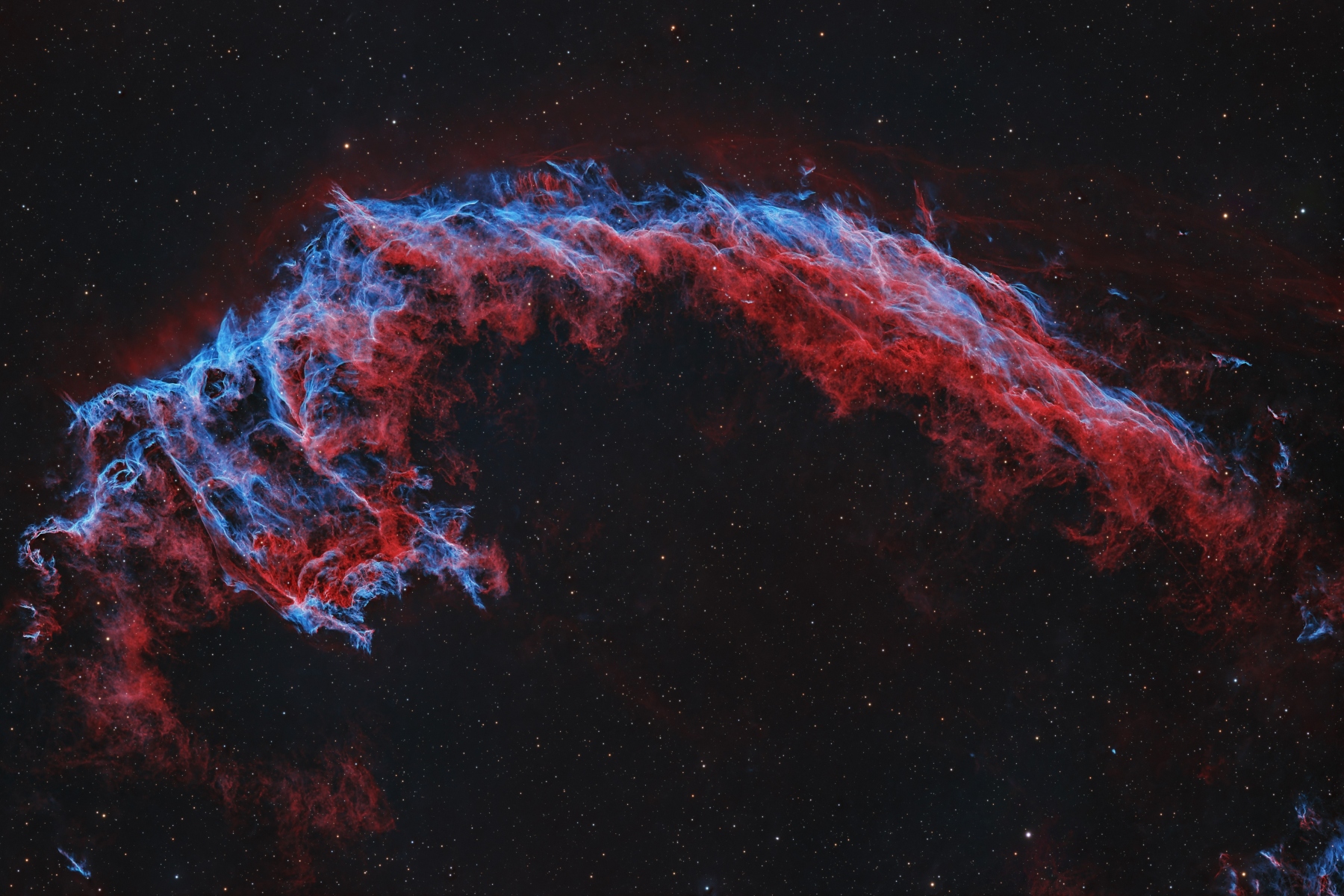
This is the Eastern Veil Nebula, NGC6992. It's part of the greater Veil Nebula in Cygnus which is a supernova remnant. Photo by club member David Krause.
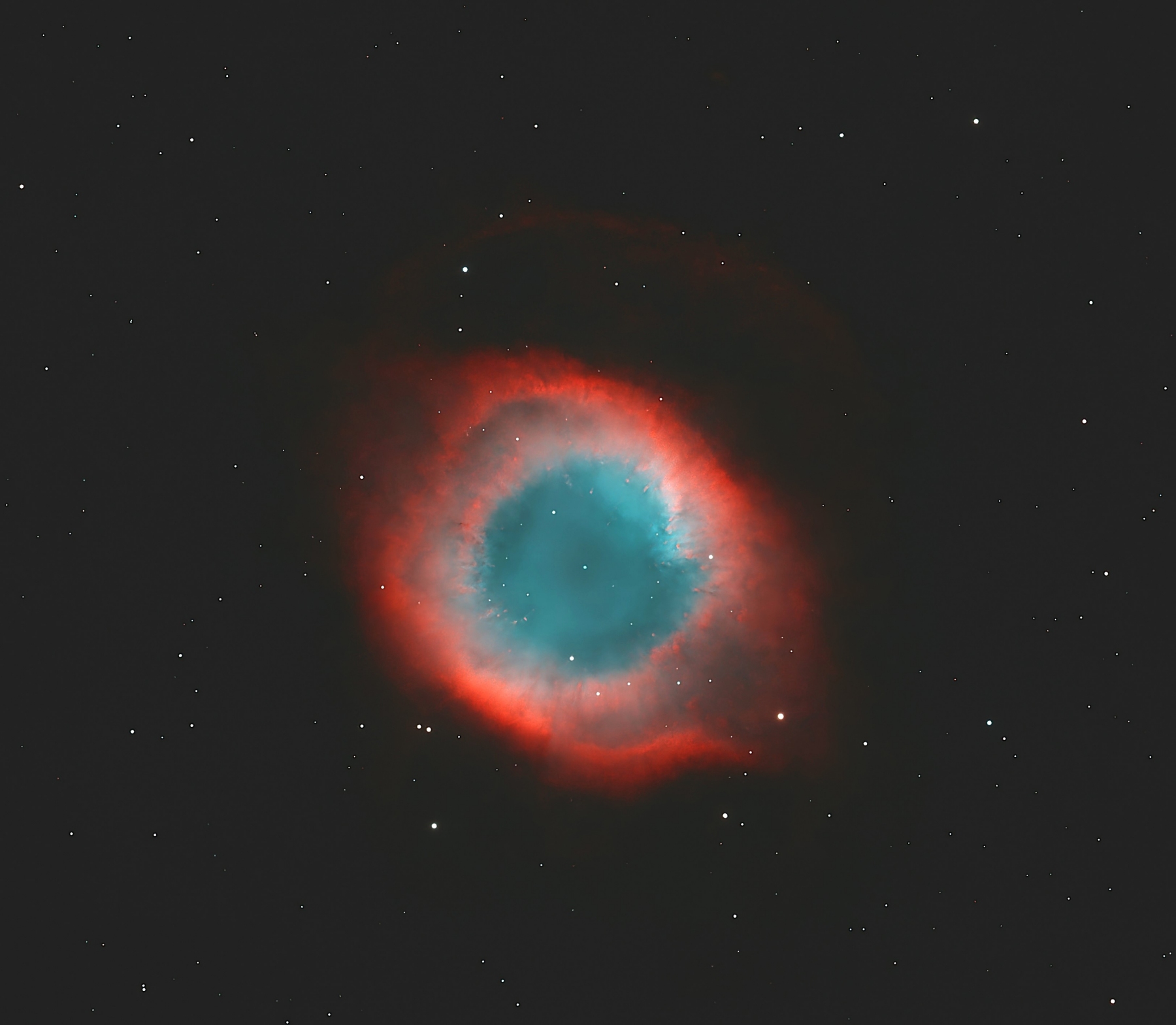
NGC 7293, the Helix Nebula, is a very large planetary nebula, with its bright ring stretching across nearly three light-years and dimmer, outer features extending even farther. It lies about 650 light years from Earth in the constellation Aquarius. Photo by club member Vince Castello.
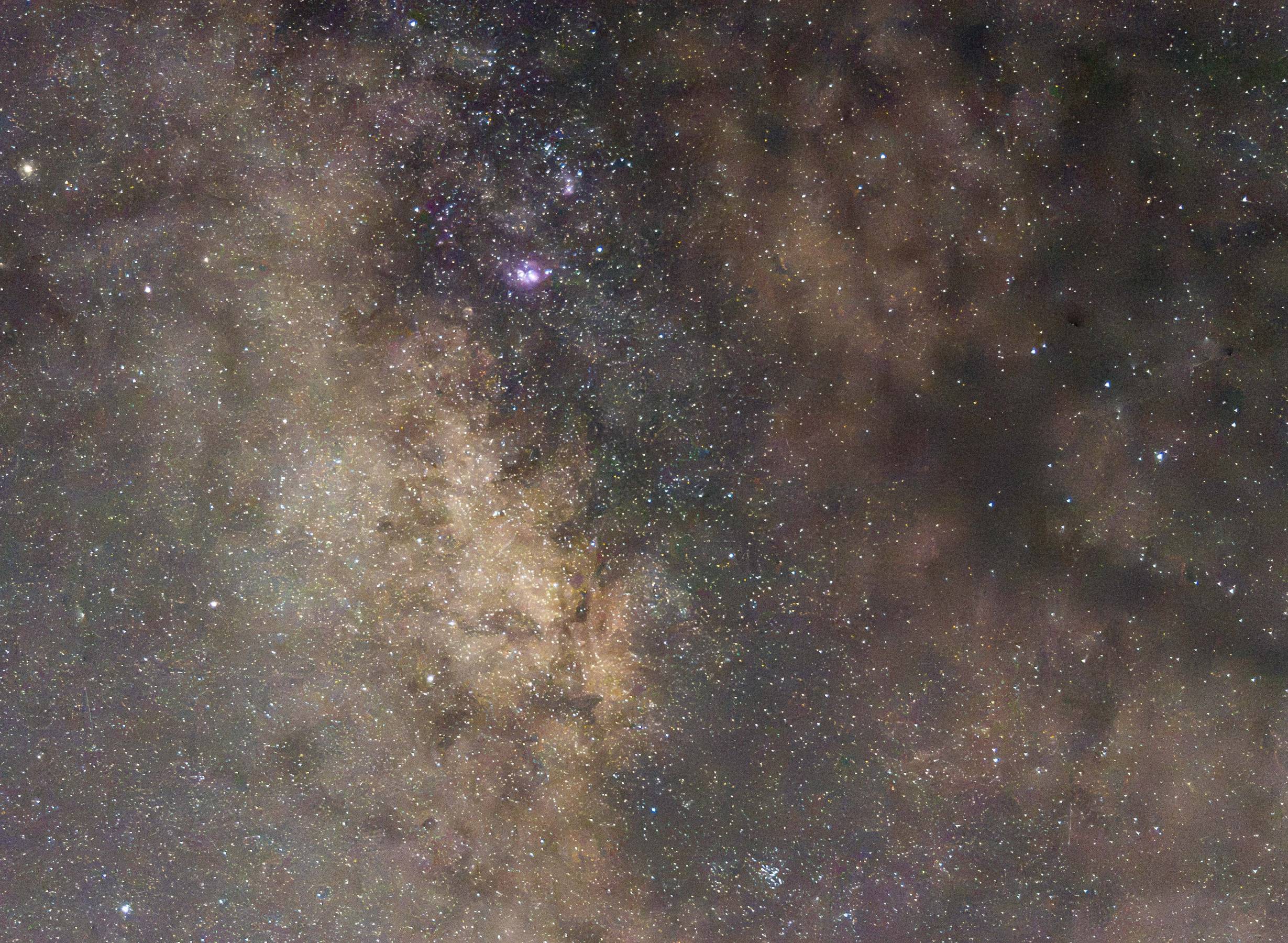
This is a view of the Milky Way from the Richland Balsam Overlook on the Blue Ridge Parkway. Photo by club member Tommy Wilkinson.

The Lagoon Nebula (Messier 8) is a giant interstellar gas cloud and star-forming region located about 4,000 to 5,000 light-years away in the constellation Sagittarius. Photo by club member Levin Green.

The Northern Lagoon Nebula, also known as NGC 7538, is an emission nebula located about 9,100 light-years from Earth in the constellation Cepheus, packed with dense dark dust clouds, massive protostars, and stellar nurseries. Photo by club member Charles Lillo.

The Crescent Nebula, also known as NGC 6888, is an emission nebula in the constellation Cygnus, about 5000 light-years away from Earth. Photo by club member Charles Lillo.

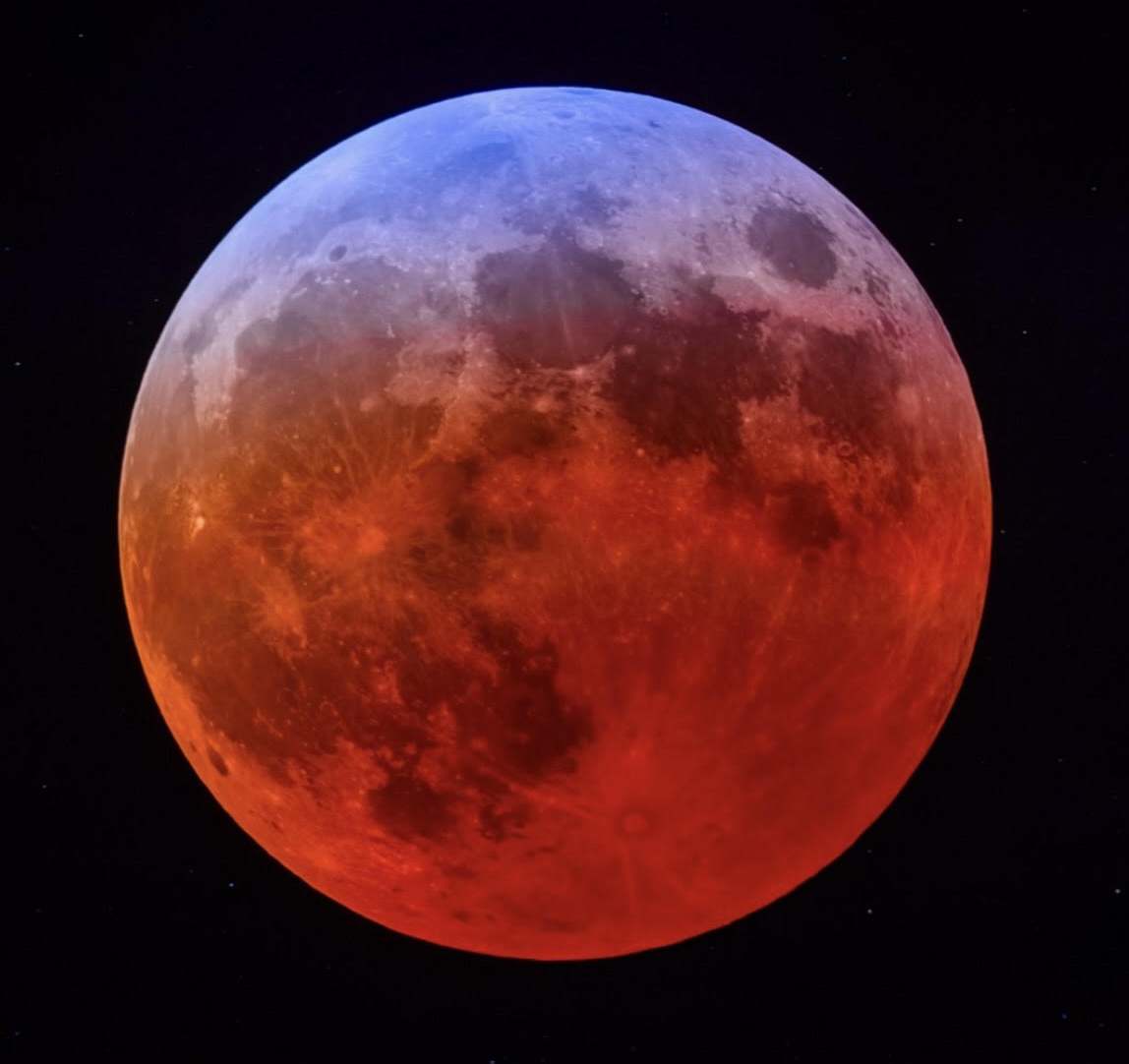
Nearly full Lunar Eclipse through wispy clouds, the night of August 27, 2026. Photo by club member Alan Davis.

Our galaxy, The Milky Way, in this wide angle shot with a little light painting, from the highest point of the Blue Ridge Parkway, Richland Balsam Overlook. Photo by club member Alan Davis.

From high up on North Carolina’s Blue Ridge Parkway, the core of our own galaxy, the Milky Way, with a long, bright Perseid meteor, on the new moon night of August 12, 2026. Photo by club member Alan Davis.

The North American Nebula (NGC7000) in the constellation of Cygnus the Swan, showing the intricate glowing gas structures and dark dust lanes. The North American Nebula has a radius of about 50 light years and is 2,202 light years from Earth. Photo by club member Charles Lillo.

The Eagle Nebula, or Messier 16, is an emission nebula region located in the constellation Serpens, in the Sagittarius arm of our Milky Way Galaxy. The nebula, discovered in 1745 by the Swiss astronomer Jean-Philippe Loys de Chéseaux, is located about 7,000 light-years from Earth and measures roughly 70x55 light years. In the bright central region are the Pillars of Creation, a star forming region, popularized by Hubble, which stretch from top to bottom about 4-5 light years. Photo by club member David Krause.

Milky Way over Silver Run at one of our club’s private star gazes near Cashiers, North Carolina. Composite photo by club member Tommy Wilkinson.

Open star cluster NGC 6823, located in the center of the frame, and SH2-86 which is the emission nebula that surrounds the star cluster in the constellation Vulpecula, approximately 6,000 light-years away from Earth and about 50 light-years across. Photo by club member David Krause.

M13, The Great Hercules Cluster contains several hundred thousand stars tightly packed into a sphere that is about 145 light-years across, in the constellation Hercules, between the bright stars Vega and Arcturus. M13 is located about 22,000 to 25,000 light-years away from Earth. Photo by club member Charles Lillo.

The Elephant's Trunk Nebula is a concentration of interstellar gas and dust within the much larger ionized gas region IC 1396 located in the constellation Cepheus about 2,400 light years away from Earth. Photo by club member Levin Green.

Messier 63 (NGC 5055), also called the Sunflower Galaxy, is a spiral galaxy in the northern constellation of Canes Venatici. M63 is about 29 million light years from Earth and spans about 130,000 light years with its outer halo of stars. Photo by club member Vince Castello.

Markarian's Chain is a stretch of 7+ galaxies that lie along a smoothly curved line and form part of the Virgo Cluster. They are more than 50 million light years from Earth. Composite photo with 75 hours of total exposure time and extensive post processing, by club member David Krause.

Messier 81 (also known as NGC 3031 or Bode's Galaxy) is a grand design spiral galaxy. Messier 82 (also known as NGC 3034, Cigar Galaxy or M82) is a starburst galaxy. Both galaxies are approximately 12 million light-years away in the constellation Ursa Major. Photo by club member Tommy Wilkinson.

Markarian's Chain is a stretch of 7+ galaxies that lie along a smoothly curved line and form part of the Virgo Cluster. They are more than 50 million light years from Earth. There are probably over a thousand galaxies in this image. Photo by club member Vince Castello.

The Pelican Nebula in Cygnus, about 1800 light years away. It has a very active mix of star formation and evolving gas clouds. Photo by club member Tommy Wilkinson.

This is the Eagle Nebula (M16), about 7,000 light years away, contains the famous Pillars of Creation, a star forming region roughly 4 to 5 light-years tall, a relatively small section of the Eagle Nebula, which spans 70 by 55 light-years. Photo by club member Levin Green.

Comet c2025 R3 PANSTARRS, from Waterrock Knob the morning of April 9, 2026. Photo by club member Knox Worde.

NGC 3184, also known as The Little Pinwheel Galaxy, is a large spiral galaxy with a small nucleus and long sprawling spiral arms. NGC 3184 is about 25 million light years from Earth, and about 50,000 light years across. Photo by club member Vince Castello.

IC410, also known as The Tadpole Nebula, is an emission nebula about 12,000 light-years away in the constellation Auriga. Photo by club member Matthew Murphy.

Raining stars! Earth’s rotation causes stars to appear to be moving across the night sky in this hour-long exposure of about 60 35-second frames, a minute apart, stacked. Photo by club member Alan Davis

Hll region containing the Sh2-207 and Sh2-208. The larger miniature Rosette Nebula like object at the top center right is Sh2-207 while the smaller bright object below it at center right is Sh2-208. Photo by club member Tom Engwall using his remote setup in Castilléjar, Spain.

M81 (Bode's Galaxy) and M82 (Cigar Galaxy) on the left, 21 million light years away in Ursa Major. Photo by club member Matthew Murphy.

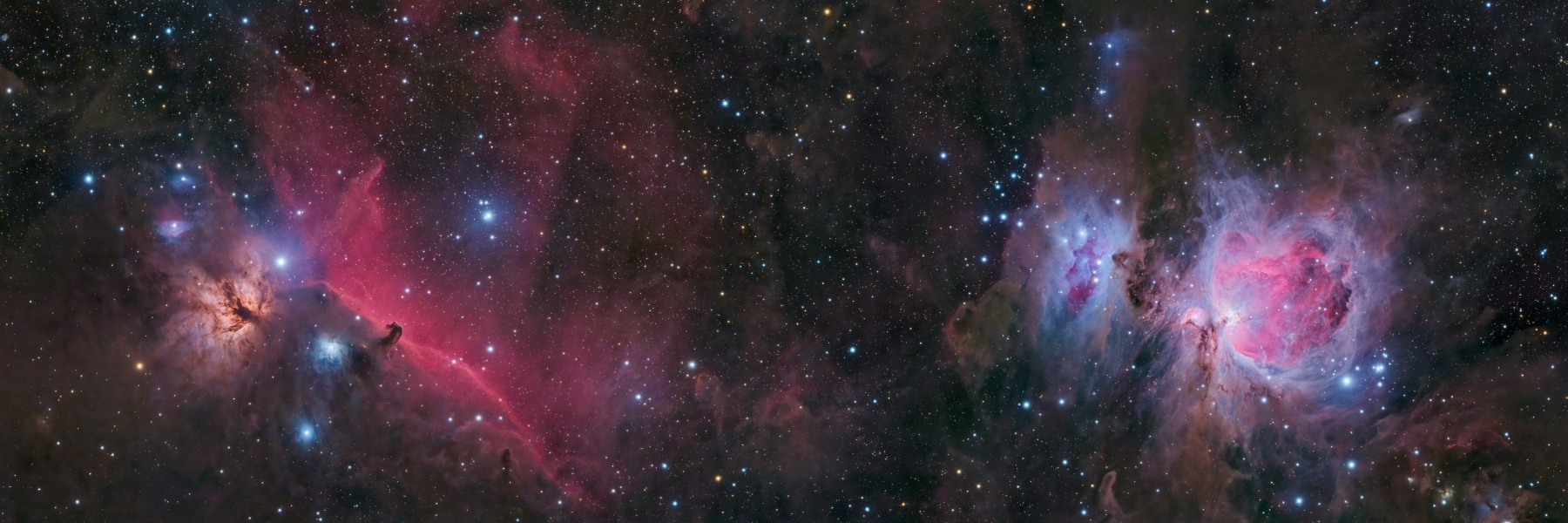
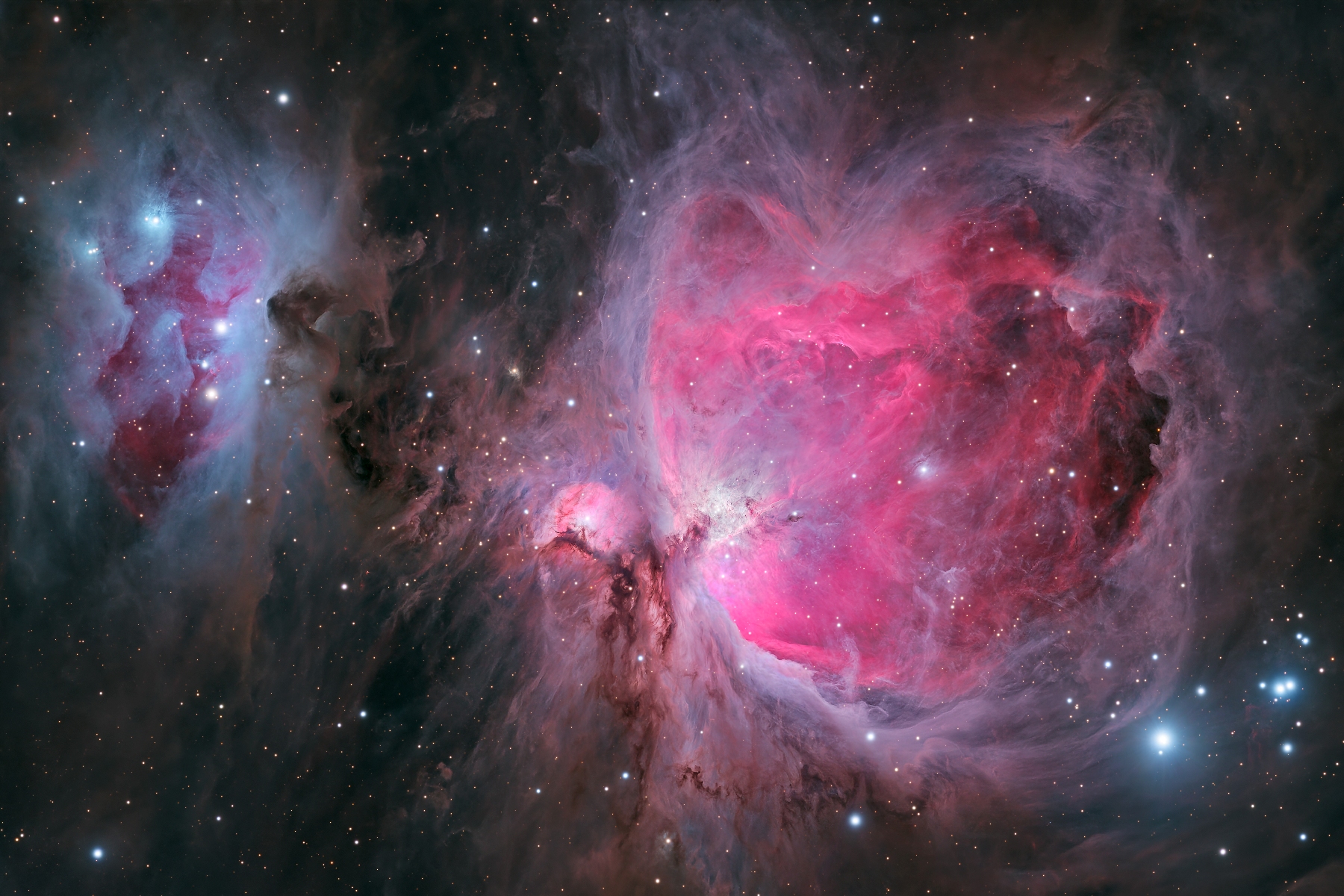
Orion Wide Field, containing Barnard's Loop, the Orion Nebula, Running Man, Flame, Horsehead, Witch Head Nebulae, and more. Photo by club member Shaun Finney.

The Rosette Nebula (also known as Caldwell 49) is an H II (atomic Hydrogen that is ionized) region located near one end of a giant molecular cloud in the Monoceros region of the Milky Way Galaxy (near Orion). The cluster and nebula lie at a distance of about 5,000 light-years from Earth and measure roughly 130 light years in diameter. Photo by club member Tommy Wilkinson.

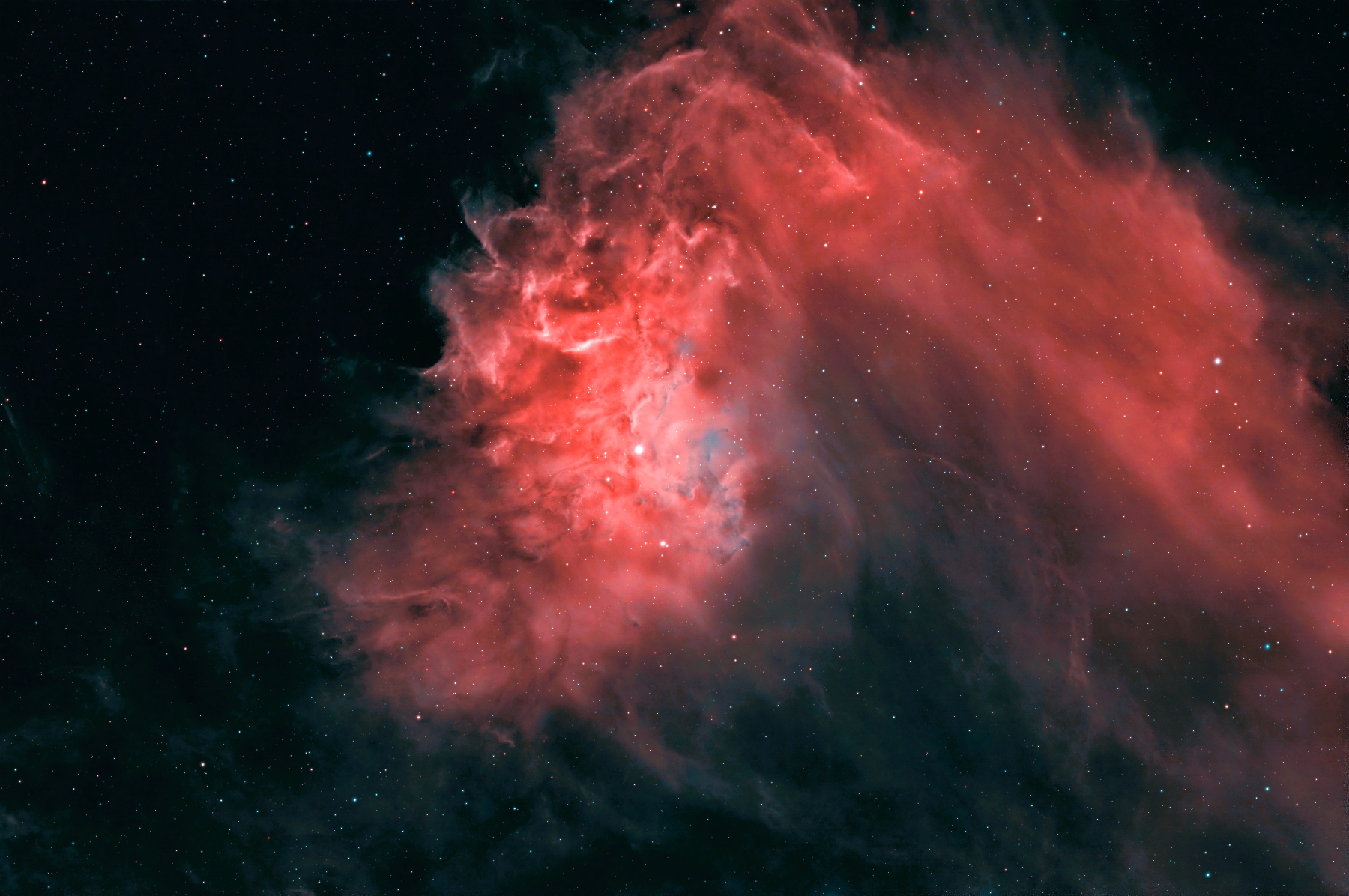
The Flaming Star Nebula is a combination emission/reflection nebula in the constellation Auriga, about 1,500 light-years from Earth. It spans roughly 5 light-years across and appears as a glowing, flame-like structure illuminated by the star AE Aurigae, the bright star just below of left of the image center. Photo by club member Vince Castello.
The Milky Way rises above the club's Grassland Mountain Observatory. Photo by club member Jerry Sherman.

The Milky Way, from our club's Grassland Mountain Observatory, August 13, 2018. Photo by club member Vince Castello.

IC410, also known as The Tadpole Nebula, is an emission nebula about 12,000 light-years away in the constellation Auriga. Photo by club member Knox Worde.

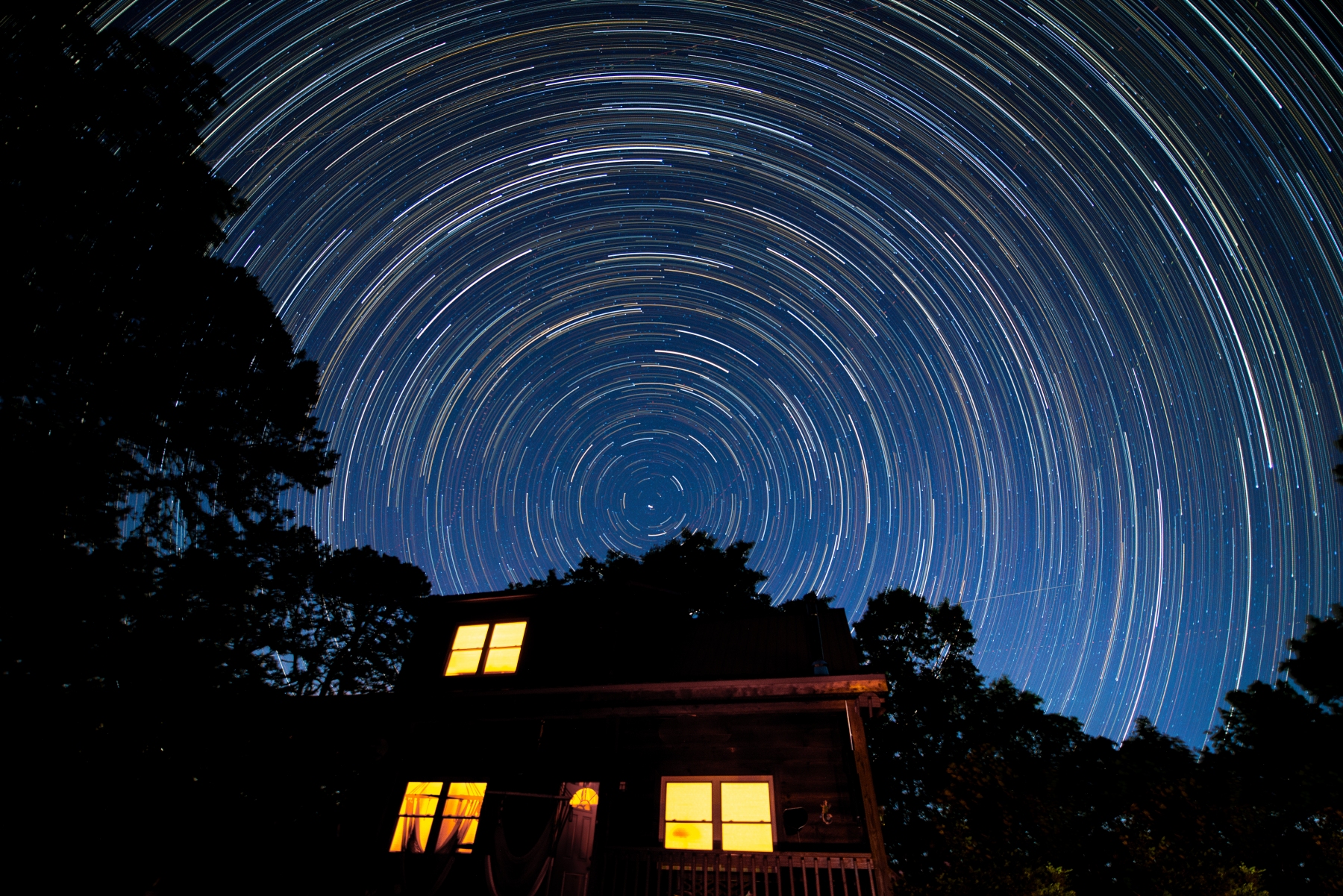
Motion of the Heavens.......Star Trails. On a clear night, when you look up at the stars over the course of a few hours it appears that the stars and planets are moving across the sky. In reality they stay in the same place and we are moving. The Earth rotates on its axis which is conveniently pointing directly at Polaris, the North Star. When you point your camera at Polaris, take a series of long exposures and put them together, the rotation of the Earth is revealed.

M31, The Andromeda Galaxy, is a barred spiral galaxy that is the largest member of the Local Group of galaxies. It is approximately 2.5 million light years from Earth and is about 200,000 light years across. A total of 30 300-second exposures produced this photo by club member Shaun Finney, at one of the club’s “Pop-up” Star Gazes, at the Mt. Pisgah Trailhead parking lot on the Blue Ridge Parkway.

Our nearest star, setting high up in the Blue Ridge Mountains. The natural beauty doesn't need words. Photo by club member Alan Davis.

The core of our galaxy, The Milky Way, photographed by club member Alan Davis at one of the club’s “Pop-up” star gazes, at the Mt. Pisgah Trailhead on the Blue Ridge Parkway.

NGC 2264 contains the Cone Nebula and the Christmas Tree Cluster. The Cone Nebula is an H II region in the constellation of Monoceros. The nebula is located about 2,700 light-years from Earth. Photo taken at the club’s Grassland Mountain Observatory by club member Levin Green.

The Great Orion Nebula, also known as Messier 42, or NGC 1976, is a diffuse nebula in the Milky Way situated south of Orion's Belt in the constellation of Orion, and is known as the middle "star" in the "sword" of Orion. It is one of the brightest nebulae and is visible to the naked eye in the night sky. Photo by club member David Krause.
Messier 74, the Phantom Galaxy, is a grand design spiral galaxy in the constellation Pisces, at a distance of about 32 million light years from Earth. This galaxy is about 95,000 light years across, similar in size to the Milky Way, and it has a significant amount of HII star forming regions. Photo by club member Vince Castello.

This is Sh2-140, H ll region and emission nebula in Cepheus, 3000 light years away. Photo by club member Tom Engwall using his remotely controlled setup in Castilléjar, Spain.

Star trails on the Winter Solstice, a set of 230 stacked images, each lasting 30 seconds. Photo by club member Simone Lipscomb.

IC 405, the Flaming Star Nebula, is both an emission and reflection nebula in the constellation Auriga surrounding the bright star AE Aurigae, about 1,500 light years from Earth. Photo by club member Matthew Murphy.

The Pleiades (M45), or "Seven Sisters," is a bright, young open star cluster in the constellation Taurus. This cluster of hot, blue stars contains thousands of stars but typically shows 6-7 clearly, glowing with a blue haze from surrounding reflection nebulae. Photo by club member Tommy Wilkinson.

The Heart Nebula is an emission nebula, 7,500 light-years away from Earth and located in the Perseus Arm of the Galaxy in the constellation Cassiopeia. It was discovered by William Herschel on 3 November 1787. Photo by club member Matthew Murphy.

M45, the Pleiades, also known as the "Seven Sisters," is a young open star cluster in the Taurus constellation, located about 444 light-years away. Photo by club member Vince Castello, using his Seestar S50 smart telescope.

The North America Nebula (NGC 7000) and Pelican Nebula (IC 5070) are star-forming emission nebulae approximately 1,500 light-years from earth located in Cygnus. NGC 7000 is on the left and IC 5070 is on the right. The two nebulae are divided by a molecular cloud filled with dark dust. Photo by club member Shaun Finney.

IC63, also known as the Ghost of Cassiopeia, is a nebula located about 550 light-years away in the constellation Cassiopeia. Photo by club member Levin Green, from our Grassland Mountain Observatory.

The Heart Nebula, NGC 896, is an emission nebula, 7,500 light-years away from Earth and located in the Perseus Arm of the Milky Way Galaxy in the constellation Cassiopeia. Photo by club member Tommy Wilkinson.

This is the Teddy Bear Nebula, also known as SH2-171, in the constellation Cepheus, about 3000 light-years from Earth. It is an emission nebula with elephant trunks (pillars) created by stellar winds
from the hot stars within the nebula. Photo by club member Matthew Murphy.

LDN 1217, also known as the Wolf’s Cave Nebula, is a dark nebula in the constellation Cepheus. This region is a dense molecular cloud, a vast reservoir of gas and dust where future stars may one day form. Photo by club member David Krause.

Sh2-124 is a faint emission nebula about 8,500 light years away in the constellation Cygnus. Photo by club member Tom Engwall, using his remote setup in Castilléjar, Spain.

Spiral galaxy M33 is located in the triangle-shaped constellation Triangulum, earning it the nickname the Triangulum galaxy. About half the size of our Milky Way galaxy, M33 is the third-largest member of our Local Group of galaxies following the Andromeda galaxy (M31) and the Milky Way, with a mass of about 40 billion stars. It is about 3 million light years away. Photo is a composite image of about 29 hours in RGB and 4 hours of Ha by club member Vince Castello.

M33, the Triangulum Galaxy, a spiral galaxy about 2.7 million light years away in the constellation Triangulum. The Triangulum Galaxy is the third-largest member of the Local Group of galaxies, behind the Andromeda Galaxy and the Milky Way. Photo by club member Matthew Murphy.

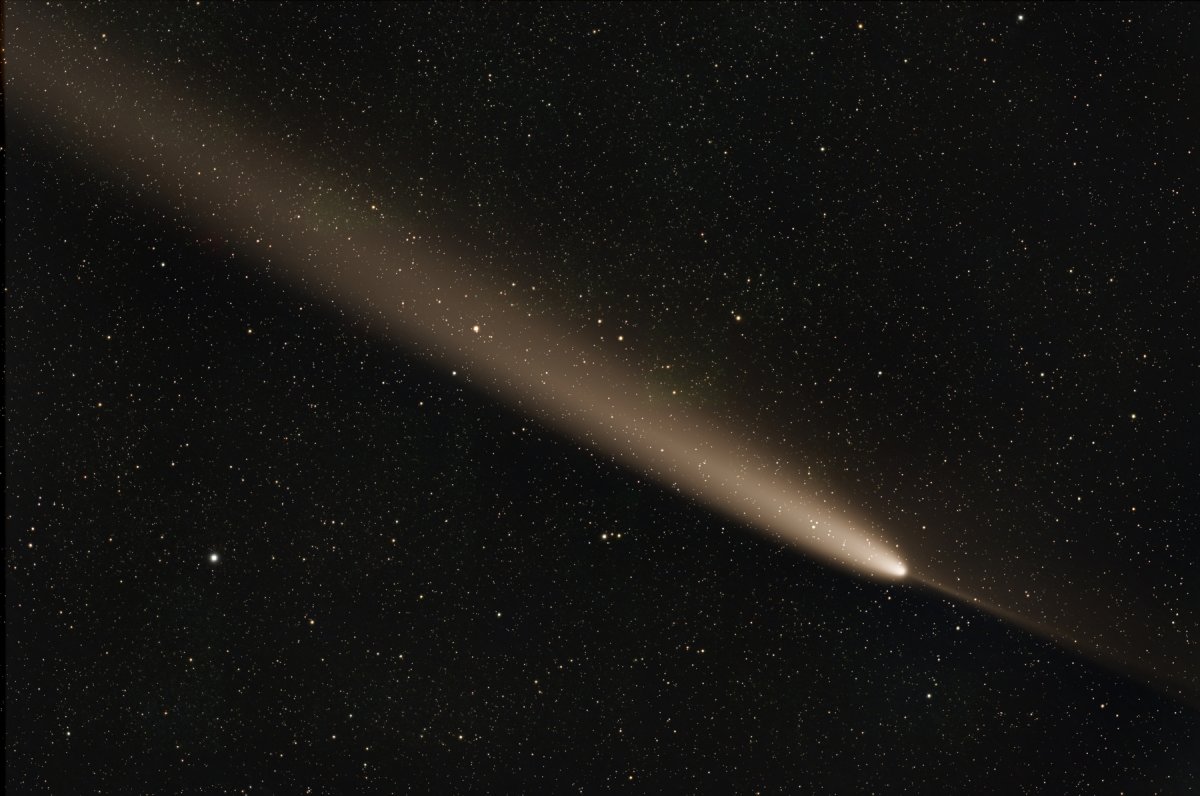
Comet Lemmon. C/2025 A6 is a non-periodic comet discovered by the Mount Lemmon Survey in images obtained on 3 January 2025. It made its closest approach to Earth on 21 October 2025 and was visible to the naked eye during October, 2025. Photo by club member Penny White, using her DwarfLab Dwarf 3 Smart Telescope.

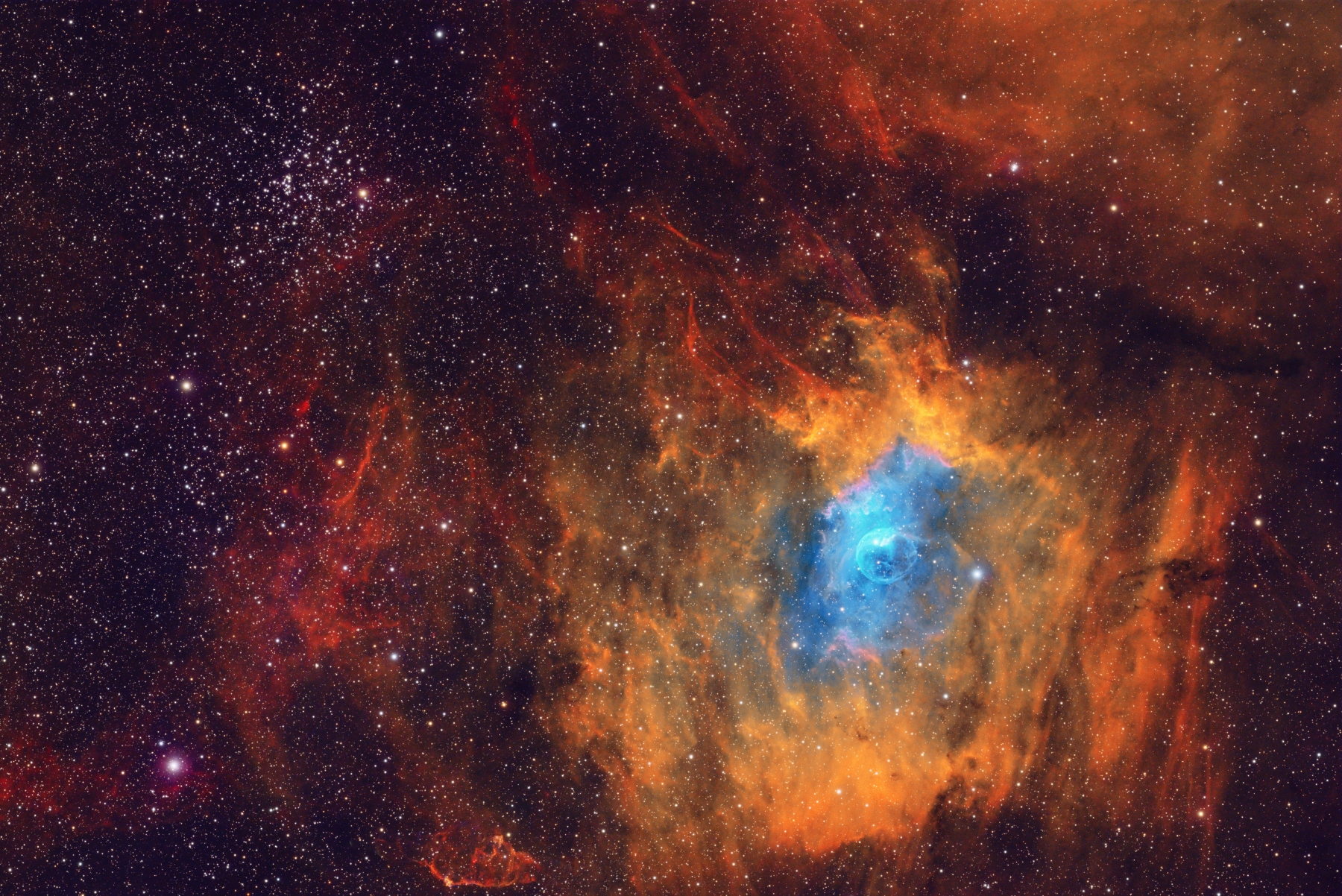
The Soap Bubble Nebula is a planetary nebula in the constellation Cygnus, near the Crescent Nebula (NGC 6888). The nebula derives its name from its symmetrical spherical shape which resembles a soap bubble. The Crescent Nebula is an emission nebula in the constellation Cygnus, about 5000 light-years away from Earth. Photo by club member Dennis Wilde.

The North American Nebula (NGC7000) and the Pelican Nebula (IC 5070) on the right, both in the constellation of Cygnus the Swan. The North American Nebula has a radius of about 50 light years and is 2,202 light years from Earth. The Pelican Nebula, about 1,800 light years from Earth, is heavily studied because it has an active mix of star formation and evolving gas clouds. Photo by club member Dennis Wilde.

NGC 896, the Heart Nebula is an emission nebula, 7,500 light-years away from Earth and located in the Perseus Arm of the Milky Way Galaxy in the constellation Cassiopeia. Photo by club member Vince Castello, a mosaic of over 9 hours of 20-second exposures using his Seestar smart telescope.

NGC 7635, the Bubble Nebula, with M52 in the top left. The Bubble Nebula is an emission nebula approximately 6 to 10 light years in diameter in the constellation Cassiopeia, located about 7,000 light years from Earth. M52 is the star cluster in the top left and is bright enough to be seen in binoculars. Photo by club member Tom Engwall using his remotely controlled setup in Castilléjar, Spain.
The Elephant’s Trunk Nebula, an emission nebula, a concentration of interstellar gas and dust within the much larger ionized gas region IC 1396 located in the constellation Cepheus about 2,400 light years away from Earth. Photo by club member Dennis Wilde, taken from upstate New York.

A composite of long exposures of star trails, demonstrating the Earth’s rotation relative to Polaris, the North Star, photographed by club member Alan Davis at one of the club’s “Pop-up” star gazes, at the Mt. Pisgah Trailhead on the Blue Ridge Parkway.

A four-panel mosaic of probably the two most famous nebulae together in one frame, the Orion and Horsehead nebulae in the constellation of Orion, about 1,350 light-years away. Photo by club member David Krause.

Composite photo of the 2025 Perseids Meteor Shower, from the club’s Grassland Mountain Observatory. Photo by club member Tommy Wilkinson.

The Iris Nebula, also known as NGC 7023, is a bright reflection nebula located about 1,400 light-years away in the constellation Cepheus. Its light shines by scattering the light from its hot, young central star. Photo by club member Shaun Finney.

An evergreen tree silhouetted against the Milky Way. Photo by Tommy Wilkinson at one of the club’s “Pop-up” star gazes at Pisgah Trailhead on the Blue Ridge Parkway.

Star trails in a series of stacked photos by club member Simone Lipscomb, at one of the club’s “Pop-up” star gazes at Waterrock Knob on the Blue Ridge Parkway under the dark skies of Western North Carolina.

M31, The Andromeda Galaxy, is a barred spiral galaxy that is the largest member of the Local Group of galaxies. It is approximately 2.5 million light years from Earth and is about 200,000 light years across. Photo by club member Shaun Finney, taken at one of the club’s “Pop-up” Star Gazes, at the Mt. Pisgah Trailhead parking lot on the Blue Ridge Parkway.

The core of our galaxy, The Milky Way, photographed by club member Alan Davis at one of the club’s “Pop-up” star gazes, at the Mt. Pisgah Trailhead on the Blue Ridge Parkway.

Sh2-171 is a star forming region of Cepheus, with dense hydrogen gas about 2,900 light years
away. Photo by club member Tom Engwall using his remotely controlled setup in Castilléjar, Spain.

IC5070, also known as The Pelican Nebula, is an emission nebula located in the constellation Cygnus the Swan, about 1,800 light years from Earth. An active star forming regions, its many young stars are heating up the surrounding gas, causing an ionization front, like a weather front, to gradually move out. Photo by club member Dennis Wilde.

Milky Way Galaxy from Big Bald, North Carolina. Composite of 645 stacked photos, plus the foreground shot, by club member Levin Green.

A fragment of LBN 208, an emission nebula in Cygnus near the crescent nebula. Photo by club member Tom Engwall using his remotely controlled setup in Castilléjar, Spain.

Milky Way over Wilson Creek, between Linville and Morganton, North Carolina. Composite photo by club member Tommy Wilkinson

Sh2-174, a very ancient planetary nebula located about 980 thousand light years away in the constellation Cepheus. It is an unusual planetary nebula because it is asymmetrical with its central white dwarf pushed off to the right. Photo by club member Tom Engwall using his remotely controlled setup in Castilléjar, Spain.

WR 134 is a variable Wolf-Rayet star located around 6,000 light years away from Earth in the constellation of Cygnus, surrounded by a faint bubble nebula blown by the intense radiation and fast wind from the star. Photo by club member David Krause.

Motion of the Heavens...Star Trails. The Earth rotates on its axis which is conveniently pointing directly at Polaris, the North Star. A series of long exposures aimed at Polaris, and merged together. Photo by club member Alan Davis.

Star trails appear to be rotating around Polaris, the North Star, in this multiple long-exposure image of the photographer's house, which she calls "Home Sweet Home." Photo by club member Simone Lipscomb.
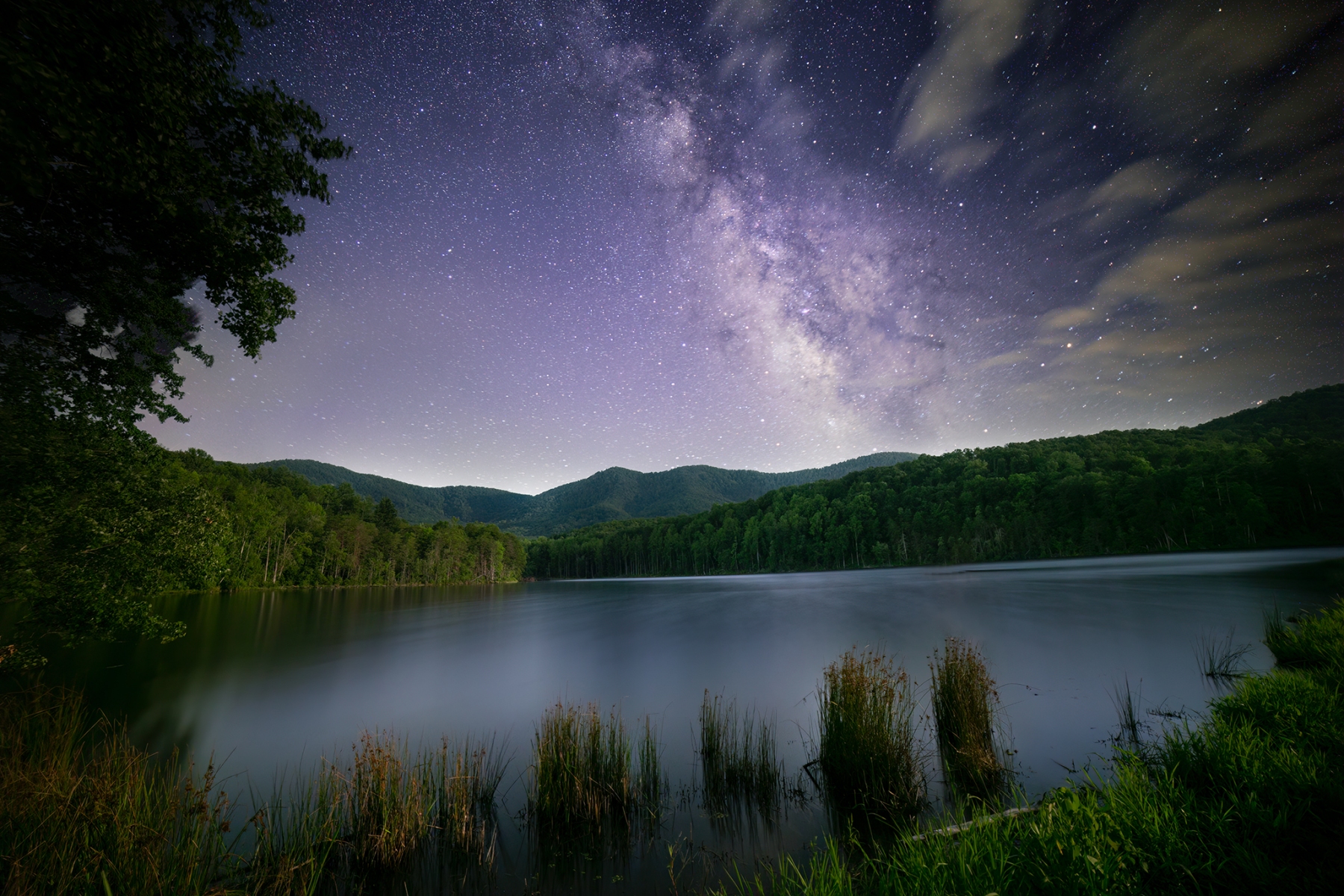
Composite photo of the Milky Way above the Broughton Hospital Reservoir near Morganton, North Carolina. Photo by club Member Tommy Wilkinson.

This is the Trifid (or Clover) Nebula (catalogued as Messier 20 or M20 and as NGC 6514), a star forming region in the north-west corner of the constellation Sagittarius, in our Milky Way galaxy about 5,200 light years from Earth. It was observed by Charles Messier on June 5, 1764. Its name means "three-lobe," which is probably how it looked to Messier in a small telescope. Photo by club member Vince Castello.

Milky Way over John Rock on the Davidson River near Brevard, North Carolina. Photo by club member Tommy Wilkinson.

Composite deep-sky photographs. The top row from left to right is M65 and M66 (Leo Triplet), M17 (Omega Nebula, Sagittarius), M13 (Globular Cluster, Hercules), and M51 (Whirlpool Galaxy, Canes Venatici). The bottom row from left to right is: M65 and M66 (Leo Triplet), continued, M33 (Triangulum Galaxy), NGC 281 (Pacman, Nebula, Cassiopeia), and M45 (Pleiades, Open Cluster, Taurus). Photos by club member Richard Reynolds using his ZWO Seestar S50 All-in-One Smart Telescope.

M59 (center) and M60 (top right) are both elliptical galaxies with M59 lying about 50 million light years away while M60 is some 57 million light years distant in the constellation Virgo. M60 contains one of the largest supermassive black holes ever found, possibly up to a billion solar masses. An interesting intermediate spiral galaxy, NGC4647, appears to overlap M60 but it is actually 6 million light years further away. Photo by club member Tom Engwall using his remotely controlled setup in Castilléjar, Spain.

“Stairway to Heaven,” by club member Simone Lipscomb. Simone shot this photo at one of our club’s “Pop-up” stargazes, at Waterrock Knob on the Blue Ridge Parkway.

Sh2-261, Lower's Nebula, is a faint emission nebula located in the constellation Orion, estimated to be about 3300 light years from Earth and about 51 light years in diameter. This is an Hll region, which means that it is a cloud of ionized hydrogen gas, illuminated by the ultraviolet radiation from nearby hot stars. Photo by club member Tom Engwall using his remotely controlled setup in Castilléjar, Spain.

Messier 106 (also known as NGC 4258), the large galaxy on the left side of image, along with some friends. M106 lies about 24 million light years away in the constellation Canes Venatici and is about 152,000 light years wide. It has a very active nucleus with distinct spiral arms, captured in Ha. The edge on galaxy to the right of the image is NGC 4217 and is thought to be a possible companion to M106. Photo by club member Tom Engwall using his remotely controlled setup in Castilléjar, Spain.

M77, or the Squid Galaxy, is one of the largest galaxies in the Messier catalog at 90,000 light years in diameter. It was initially identified as a nebula by the French astronomer Pierre Méchain in 1780, who communicated his finding to Charles Messier, and it became M77, the only Seyfert galaxy in the catalog. A Seyfert galaxy is a galaxy with an intensely active center that is obscured by gas and dust in visible light. It is one of the brightest visible to earth. M77 is located in the constellation Cetus at a mean distance of 44 million light-years from Earth. Photo by club member Vince Castello.

NGC 613 is a barred spiral galaxy located about 68 million light years away in the southern constellation of Sculptor. It has a very active nucleus. It was discovered in 1798 by German-English astronomer William Herschel. Its mass is estimated at about 45 billion solar masses. It has several giant clouds of molecular hydrogen in its core area according to a study by an international team of astronomers using the Atacama Large Millimeter/sub-millimeter Array (ALMA), published in June 2024. Photo by club member Vince Castello.

M95 is a beautiful barred spiral galaxy that has around 40 billion stars and is about 70,000 light years in diameter. It was discovered by the French astronomer Pierre Méchain in 1781, who shared his finding with Charles Messier and it became M95 in the Messier Catalog. M95 is located in the constellation Leo at a distance of 33 million light-years from Earth. Photo by club member Vince Castello.

M101, the Pinwheel Galaxy, is a face-on spiral galaxy 25 million light-years distant in the constellation Ursa Major. It’s twice the diameter of our Milky Way and contains over a trillion stars. Photo by club member David Krause.

Hind's Variable Nebula (NHC 1555 or Sh2-238). It is known as a variable nebula because it is a reflection nebula that is illuminated by a variable star - T Tauri. It lies about 400 LYs away and is about 4 LYs wide with a magnitude of 9.98. Photo by club member Tom Engwall using his remotely controlled setup in Castilléjar, Spain.

The Milky Way Galaxy looking West-Southwest from the club’s Grassland Mountain Observatory. You may notice Orion, Taurus, Sirius, Jupiter, and the Pleiades. Photographed at a GMO public star gaze by club member Tommy Wilkinson.

M35 and NGC2158: M35 is the cluster of stars on the right dominated by many bright blue stars, a relatively close open cluster (about 2,970 light years away) and relatively young at 150 million years old with about 400 stars. NGC2158, at the top left, is a dense open cluster much farther away - at least 11,000 light years distant and estimated to be around 2 billion years old. Photo by club member Tom Engwall using his remotely controlled setup in Castilléjar, Spain.

Sh2-240, also known as The Spaghetti Nebula, the remnant of a type II supernova approximately 3,000 light years distant that occurred some 40,000 years ago in the Constellation Taurus. The nebula is quite large, covering an area in the sky much larger than our moon. There is a strong radio source at its center believed to be a neutron star, a result of the stellar explosion. Photo by club member Knox Worde.

IC405, The Flaming Star Nebula is an emission and reflection nebula about 1,500 light-years away from Earth in the Constellation Auriga. Photo by club member Knox Worde.

The Milky Way and the Large Magellanic Cloud and Small Magellanic Cloud, near Kaikoura New Zealand. A rare scene for Northern Hemisphere residents, the LMC and SMC are two irregular dwarf galaxies in the southern celestial hemisphere. Orbiting the Milky Way galaxy, these satellite galaxies are members of the Local Group. Photo by club member Ken Westall.

Horsehead and Flame nebulae, located in the constellation Orion, just below Alnitak, the eastern star in Orion’s Belt, about 1,375 light-years from Earth. Photo by club member Tommy Wilkinson.

NGC 1491, also known as "The Fossil Footprint Nebula" is an emission type bright nebula located about 9,800 light years away from Earth in the constellation Perseus. Photo by club member Tom Engwall using his remote setup in Castilléjar, Spain.

The Rosette Nebula lies about 5,000 light years away in the constellation Monoceros. It spans about 100 light years across, and in the middle of the nebula lies star cluster NGC 2244, which is an open cluster full of bright, young stars. They formed about four million years ago from the nebulae material and their stellar winds are clearing a hole in the nebula's center. Ultraviolet light from the hot cluster of stars causes the surrounding nebula to glow. Photo by club member David Krause.

The Flaming Star Nebula, or IC 405, is an emission and reflection nebula in the constellation Auriga, around 1500 light-years from Earth. The nebula 5 light-years across. Its stand-out feature is the bright flaming star itself, AE Aurigae, seen as the brightest point in this image by club member Tommy Wilkinson.

LBN 576, also known as CTB 1 and by many unofficial names such as the Garlic Nebula, is actually a supernova remnant about 10,000 light years away and about 10,000 years old. Photo by club member Tom Engwall, using his remote setup in Castilléjar, Spain.

The Pacman Nebula, NGC 281, is a bright emission nebula in the northern constellation of Cassiopeia 9,459 light years from Earth. Photo by club member Tommy Wilkinson.

NGC 7822 is a young, active star forming region in Cepheus about 3000 light years away. Strong stellar winds and radiation shape the surrounding gas and cause it to glow. Photo by club member Tom Engwall on his remote setup in Castilléjar, Spain.

The Tulip Nebula (Sh 2-101) in the constellation Cygnus, about 5,871 light years from Earth. Photo by club member Tommy Wilkinson.

The Soul Nebula is a large star-forming region next to the Heart Nebula in Cassiopeia. Photo by club member David Krause.

The Eagle Nebula, or Messier 16, is an emission nebula region located in the constellation Serpens, in the Sagittarius arm of our Milky Way Galaxy. The nebula, discovered in 1745 by the Swiss astronomer Jean-Philippe Loys de Chéseaux, is located about 7,000 light-years from Earth and measures roughly 70x55 light years. In the bright central region are the Pillars of Creation, a star forming region, popularized by Hubble, which stretch from top to bottom about 4-5 light years. Photo by club member Vince Castello.

The Sadr Region is the diffuse emission nebula surrounding Sadr at the center of Cygnus's cross. Sadr lies within the Milky Way galaxy about 1,800 light years from Earth. Photo by club member Tommy Wilkinson.

This is a two panel mosaic of the Bubble Nebula (top left), NGC 7635, and NGC 7538 (bright nebula at bottom center), located about 7100 light years away in Cassiopeia. Photo by club member Tom Engwall, from his remote observing site in Castilléjar, Spain.

Comet C2023 A3 Tsuchinshan–ATLAS, as it appeared on October 16, 2024.
Stacked set of sixty-four 30 second exposures using RedCat 51 refractor telescope and full frame QHY128C camera, processed in PixInsight. Photo by club member Knox Worde.

Emission nebulae Sh2-115 and Sh2-116 in the area near Deneb in the constellation Cygnus. Sh2-115 (central area of this image) is estimated to be about 7,500 light years away. Sh2-116 is the circular nebula at top right. Its distance has not been determined. Photo by club member Tom Engwall, captured on his remotely operated setup in Castilléjar Spain.

Colorful aurora, as photographed from Leicester, North Carolina, the result of a giant X-class solar flare two days earlier that launched energetic electrons and protons into the Solar System. Photos show colors and details that human eyes cannot see, because the camera collects photons for a longer time, in this case, 30 seconds. Photo by club member Jerry Sherman.

M31 or NGC224, The Andromeda Galaxy, is a barred spiral galaxy that is the largest member of the Local Group of galaxies. It is approximately 2.5 million light years from Earth and is about 200,000 light years across. It is located in the Andromeda constellation and covers about 3 degrees of the sky (about 6 full moon widths). There are two companion galaxies in the image: M32, just above and left of the center, and M110, to the lower right of the center. Photo by club member David Krause.

The Pillars of Creation in the Eagle Nebula (M16), about 7,000 light years away. The Pillars are a star forming region, roughly 4 to 5 light-years tall, a relatively small section of the Eagle Nebula, which spans 70 by 55 light-years. Photo by club member David Krause.

The Revenant of the Swan is the large bright star at top center, also known as P 34 Cyg, a variable star that has a history of brightening significantly then fading to below naked eye visibility. It is located in the constellation Cygnus the Swan, about 5,000 - 6,000 light years away. Photo by club member Tom Engwall, captured on his remote setup in Castilléjar Spain.

Barnard 343 and LDN 880 in the constellation Cygnus. The most prominent feature in this image is Barnard 343, the dark patch near the center. LDN 880 is the area just above it. Photo by club member Tom Engwall, captured on his remote setup in Castilléjar Spain.

The Ghost Nebula (Vdb 141 / Sh2-136) is located in the constellation Cepheus about 1,470 light years away and is over 2 light-years across. The reflected light from several stars embedded within the nebula give it a yellowish-brown color. Photo by club member Tom Engwall, captured on his remote setup in Castilléjar Spain.

M20, The Trifid Nebula, is a star-forming nebula located 9,000 light-years away from Earth in the constellation Sagittarius. The Trifid sits in the heart of the southern Milky Way in the summer sky. You can find it just above the much bigger and more famous Lagoon Nebula. Photo by club member Tommy Wilkinson.

M104, the Sombrero Galaxy is located about 30 million light-years away in the constellation Virgo. It is an edge-on spiral galaxy classified as Sa (the bulge dominates the galaxy) that is about 50,000 light years across. Photo by club member Vince Castello.

The Whirlpool Galaxy, also known as Messier 51a or NGC 5194, is an interacting grand-design spiral galaxy in the constellation Canes Venatici, about 31 million light years from Earth, and was the first galaxy to be classified as a spiral galaxy. Photo by club member Mark Frost.

M101, the Pinwheel Galaxy about 21 million light-years from Earth in the constellation Ursa Major. At the lower right is dwarf galaxy NGC 5474. Photo by club member Tommy Wilkinson.

The Blue Horsehead Nebula, IC 4592, is a reflection nebula in Scorpius. The Nebula is about 40 light-years across, located some 420 light-years away near the center of our Milky Way Galaxy. The blue light comes from fine dust reflecting the light of nearby stars. Much of the reflected light comes from the star at the "eye of the horse" called Nu Scorpii. A second reflection nebula surrounding two stars is also visible to the right of the image, called IC 4601. Photo by club members David and Jamie Krause.

M108 (the Surfboard) and M97 (The Owl Nebula). M108 is an edge-on barred spiral galaxy about 28 million miles away and M97 is a planetary nebula located in the Milky Way, 2,030 light years away. Photo by club member Tom Engwall, using his remotely operated setup in Castilléjar, Spain.

The Sadr Region refers to the emission nebula surrounding the star Sadr (Gamma Cygni) that forms the intersection of the cross in the constellation Cygnus, in the center of this image. It contains the Butterfly Nebula (on the left) and open star cluster NGC 6910 (top left of Sadr). Photo by club member David Krause.

The Whirlpool Galaxy, also known as Messier 51a or NGC 5194, in the constellation Canes Venatici. Its distance from Earth is about 31 million light-years and it spans some 80.000 ly in diameter. Photo by club member Vince Castello.

M63, The Sunflower Galaxy is a spiral galaxy in the northern constellation of Canes Venatici, about 27 million light years away. Photo by club member Tommy Wilkinson.

NGC2359, Thor's Helmet, an emission nebula about 12-15,000 light years away in the constellation Canis Major. Photo by club member Vince Castello.

NGC 2174 (also known as the Monkey Head Nebula), an emission nebula, an active star forming region mostly composed of hydrogen gas. It's located about 6400 light years away in the Orion constellation. Photo by club member Tom Engwall on his remote setup in Castilléjar, Spain.

M51, The Whirlpool Galaxy. This is actually two galaxies in the process of merging with each other, about 31 million light years away from Earth. Photo by club member Tommy Wilkinson.

NGC 5364 is the beautiful face-on galaxy located about 54.5 million light years away in Virgo. Next to it is NGC 5363, a lenticular galaxy, about 65 million light years from Earth. Photo by club member Tom Engwall, captured on his remotely operated setup in Castilléjar, Spain.

Sh2-308, commonly called The Dolphin-Head Nebula, about 4,500 light years distant in the constellation Canis Major. The nebula is about 60 light years across at its widest spot. Photo by club member Knox Worde.

Frames from a video of a 0.8 second solar transit of the ISS. Video was taken through an Ha telescope at 160fps then individual frames selected, sharpened, colorized and finally stacked together. Photos and processing by club member Knox Worde.

The Rosette Nebula (also known as Caldwell 49) is an H II (atomic Hydrogen that is ionized) region located near one end of a giant molecular cloud in the Monoceros region of the Milky Way Galaxy (near Orion). The cluster and nebula lie at a distance of about 5,000 light-years from Earth and measure roughly 130 light years in diameter. Photo by club member Vince Castello.

The Flaming Star and Tadpoles Nebulae, designated as IC 405 and IC 410 respectively. They are both large emission nebulae located in the constellation Auriga. Though they appear together from our perspective, IC 405 is 1,500 light years from us while IC 410 is 12,000 light years from us. Photo by club member David Krause.

NGC2359, also called Thor's Helmet, an emission nebula about 12,000 light years distant in the constellation Canis Major. The nebula is about 30 light years across; the central star is a special star called a Wolf-Rayet star, an extremely hot star thought to be in a brief pre-supernova stage of evolution. Photo by club member Knox Worde.

M31 or NGC224, The Andromeda Galaxy, is a barred spiral galaxy that is the largest member of the Local Group of galaxies. It is approximately 2.5 million light years from Earth and is about 200,000 light years across. It is located in the Andromeda constellation and covers about 3 degrees of the sky (about 6 full moon widths). There are two companion galaxies in the image: M32, just above and left of the center, and M110, to the lower right of the center. Photo by club member Vince Castello.

SH2-170, also known as the Little Rosette Nebula, in the constellation Cassiopeia - some 7500 light years away. Photo by club member Tom Engwall, captured on his remotely operated setup in Castilléjar, Spain.

NGC1333, a reflection nebula in the Perseus region of the sky. Photo by club member Tommy Wilkinson.

NGC1499, The California Nebula, about 1,500 light years distant in the Constellation Perseus. Photo by club member Knox Worde.

M31, The Andromeda Galaxy, is the nearest major galaxy to the Milky Way, at only 2.537 million light years away, in the constellation Andromeda. Two of its satellite galaxies, M110 (below) and M32 (above in the image) are easily seen in a small scope. Photo by club member Knox Worde.

NGC 2264, The Christmas Tree Cluster and the Cone Nebula, a large emission nebula located 2,500 light-years away in the constellation Monoceros. Photo by club member Tommy Wilkinson.

IC1805 and IC 1848, otherwise known as the Heart & Soul nebula. Both are emission nebulas located in the constellation Cassiopeia, 7500 light years away from Earth. Photo by club member Knox Worde.

M31, The Andromeda Galaxy, is the nearest major galaxy to the Milky Way, at only 2.537 million light years away, in the constellation Andromeda. Photo by club member Tom Engwall, captured on his remotely operated setup in Castilléjar, Spain.

The Veil Nebula, about 1,500 light years distant in the constellation Cygnus. It is the remnant of a supernova that occurred some 10-15,000 years ago. Photo by club member Knox Worde.

M45, The Pleiades, are an asterism, made up of more than 1,000 stars. They are located in the constellation Taurus and are about 410 light-years from Earth. Photo by club member Alan Davis.

The Crab Nebula (M1), a supernova remnant from AD 1054 in the constellation Taurus the Bull, approximately 6,500 light-
years away. At 11 light-years wide, M1 is currently expanding outward at about 1,500 km/s (930 mi/s). Photo by club member David Krause.

LBN 251 located in a hydrogen rich section of Cygnus, the Swan, where there is much star formation. Photo by club member Tom Engwall, captured on his remotely operated setup in Castilléjar, Spain.

The Lion Nebula (Sh2-132, or Sharpless 132) is a deep-sky emission nebula in the constellation Cepheus, about 10,000 light-years away in the Perseus Arm of the Milky Way Galaxy. Photo by club member Tommy Wilkinson.

The partial solar eclipse of October 14, 2023, as seen from Asheville, North Carolina. People in the center line of totality saw the annular "Ring of Fire," visible in the south-western US. Composite photo by club member Jerry Sherman.

SH2-155, The Cave Nebula, a diffuse nebula in the constellation Cepheus, about 2400 light years away from Earth. Photo by club member Tom Engwall, captured on his remotely operated setup in Castilléjar, Spain.

Harvest Moon rising over Tanbark Overlook on the Blue Ridge Parkway. Photo by club member Alan Davis.

The Iris Nebula, NGC 7023, a bright reflection nebula in the constellation Cepheus, is 1,300 light-years away and is six light-years across. Photo by club member Tommy Wilkinson.

NGC 6914, the blue area in the center, is a reflection nebula, some 6000 light years away, in the constellation Cygnus. Photo by club member Tom Engwall, captured in July and August, 2023, with his remotely operated setup in Castilléjar, Spain.

NGC 6946, The Fireworks Galaxy, is a spiral galaxy in the constellation Cepheus, about 25 million light years away. Photo by club member Vince Castello.

The Elephant's Trunk Nebula is a concentration of interstellar gas and dust within the much larger ionized gas region IC 1396 located in the constellation Cepheus about 2,400 light years away from Earth. Photo by club member Tommy Wilkinson.

Messier 3 (M3) is a globular cluster located in the constellation Canes Venatici, the Hunting Dogs. It is one of the brightest, largest globular clusters in the sky and is approximately 33,900 light years from Earth. Photo by club member Tom Engwall using his remotely operated setup in Castilléjar, Spain.

M57, or the Ring Nebula, is a planetary nebula, the glowing remains of a sun-like star about 2,000 light-years away in the constellation Lyra. Photo by club member Rob Calfee, Flat Rock, NC.

NGC 7380, the Wizard Nebula, located in the constellation Cepheus about 7,000 light years from Earth. The star cluster is embedded in a nebula, which spans some 110 light-years. Photo by club member Rob Calfee, Flat Rock, North Carolina.

SH2-132, the Lion Nebula, 10,000 to 12,000 light years away in the constellation Cepheus. Photo by club member Tom Engwall using his remotely operated setup in Castilléjar, Spain.

North America Nebula (NGC 7000), a star-forming emission nebula approximately 1,500 light-years from Earth located in Cygnus. Photo by club member Tommy Wilkinson.

M51, The Whirlpool Galaxy. This is actually two galaxies in the process of merging with each other, about 31 million light years away from Earth. Photo by club member Tom Engwall using his remotely operated setup in Castilléjar, Spain.

NGC 6960, the Western Veil Nebula, a super nova remnant the constellation Cygnus, about 2,400 light years from Earth. The source supernova was a star 20 times more massive than the Sun which exploded between 10,000 and 20,000 years ago. At the time of the explosion, the supernova would have appeared brighter than Venus in the sky, and visible in the daytime. Photo by club member Tommy Wilkinson.

NGC7635 (the Bubble Nebula) is an emission nebula in Cassiopeia and is approx 7,100 LY from Earth. The bubble is 7 LY wide, and is created by stellar wind from a massive young central star. Photo by club member Sean McDonald.

The Lagoon and Trifid nebulae are both star-forming clouds of interstellar gas and dust. The Lagoon is 5,200 light-years from Earth while the Trifid is 9,000. Photo by club member David Krause.

M 101, The Pinwheel Galaxy, a face-on galaxy about 21 million light-years away in the constellation Ursa Major. Photo by club member Tom Engwall using his remotely operated setup in Castilléjar, Spain (before the 2023 Supernova appeared).

North America (NGC 7000) and Pelican Nebula (IC 5070), star-forming emission nebulae approximately 1,500 light-years from earth located in Cygnus. NGC 7000 is on the left and IC 5070 is on the right. The two nebulae are divided by a molecular cloud filled with dark dust. Photo by club member David Krause.

IC 2169, a reflection nebula in Monoceros, about 2,480 light years distant. IC 2169 is the large blue area in the image. Photo by club member Tom Engwall using his remotely operated setup in Castilléjar, Spain.

NGC 2419, The Intergalactic Wanderer. This globular cluster is part of the Milky Way with an orbit that takes it 300,000 light years out. Photo by club member Tom Engwall at the club's Grassland Mountain Observatory.

NGC 2359, Thor's Helmet, about 11,960 light years away in the constellation Canis Major. Photo by club member Tom Engwall using his remotely operated setup in Castilléjar, Spain.

The Hickson 44 Galaxy Group on the edge of the Virgo Supercluster of galaxies, about 70-80 million light years distant. Photo by club member Vince Castello.

IC 410 also known as the Tadpole Nebula, about 12,000 light years away located in the constellation Auriga. Photo by club member Tom Engwall, captured on his remotely operated setup in Castilléjar, Spain.

NGC 4535 and NGC 4526 and several other smaller galaxies, around 55 million light years from Earth, members of the Virgo Cluster. Photo by club member Tom Engwall, captured with his remotely operated setup in Castilléjar, Spain.

M63, the Sunflower Galaxy in the constellation Canes Venatici, 37 million light years from Earth. Photo by club member Sean McDonald.

IC434, the Horsehead Nebula (also known as Barnard 33) in the constellation of Orion, about 1400 light years from Earth. Photo by club member Vince Castello.

SH2-248, The Jellyfish Nebula, a remnant of a galactic supernova in the constellation Gemini, about 5,000 light years from earth. Photo by club member Sean McDonald.

M81, Bode’s Galaxy, a spiral galaxy about 12 million light years from Earth in the constellation Ursa Major. Photo by club member Sean McDonald from his back yard in Burnsville, North Carolina.

Galaxy rich area in the Triangulum. The two largest galaxies are NGC 672 and IC 1727, about 23 million light years away. Photo by club member Tom Engwall, captured with his remotely operated setup at PixelSkies Observatory in Castilléjar, Spain.

IC 405, The Flaming Star Nebula located in the constellation Auriga about 1500 light years away. Photo by club member Tom Engwall, captured on his remotely operated setup in Castilléjar, Spain.

M1, the Crab Nebula, a supernova remnant in the constellation of Taurus, about 6,523 light years from Earth. Photo by club member Vince Castello.

NGC 2264, the official designation for two objects, the Cone Nebula and the Christmas Tree Cluster, about 2400 light years away in the constellation Monoceros. Photo by club member Tom Engwall, using his remote setup in Castilléjar, Spain.

The Western Veil Nebula (or the Witches Broom Nebula or NGC 6960) supernova remnant in the constellation Cygnus. Photo by club member Vince Castello.

M1, The Crab Nebula, a supernova remnant in the constellation Taurus, about 6,500 light years from Earth. Photo by club member Rob Calfee.

M16, The Eagle Nebula containing the "Pillars of Creation," in the constellation Serpens the Serpent, about 7,000 light years from Earth. Photo by club member Sean McDonald.

NGC2246 The Rosette Nebula in the Monoceros region of the Milky Way. Photo by club member Sean McDonald, Burnsville, North Carolina.

The California Nebula (NGC1499). Photo by club member Sean McDonald with his Williams Optics GT71 refractor telescope from our club’s Grassland Mountain Observatory in December, 2022.

Sh2-157 and the Lobster Claw, 11,000 light years away in Cassiopeia. Photo by club member Tom Engwall, from his remote setup in Castilléjar, Spain.

Sh2-101, "The Tulip Nebula," about 6000 light years away in the constellation Cygnus. Photo by club member Tom Engwall, remotely captured at his setup in Castilléjar, Spain.

M33, the Triangulum Galaxy, a spiral galaxy about 2.7 million light years away and part of the Local Group. Photo by club member Tom Engwall, remotely captured at his setup in Castilléjar, Spain in September, 2022

The Heart Nebula, IC 1805, discovered by William Herschel in 1787, about 7500 light years away from Earth, located in the constellation Cassiopeia. Photo by club members Jamie and David Krause.

The Seagull Nebula, located along the border between the constellations Monoceros and Canis Major. Photo by club member Rob Calfee.

NGC 6888, the Crescent Nebula, an emission nebula located in the constellation Cygnus about 5000 light years away and about 25 light years across - discovered by Willian Herschel in 1792. Photo by club member Tom Engwall, remotely captured at his setup in southern Spain

The Pelican Nebula in Cygnus, about 1800 light years away. Remotely captured over 36.7 hours by club member Thomas Engwall in July, 2022 from his setup in Southern Spain.

Eastern Veil Nebula, part of the Veil Nebula in Cygnus. Photo by Tom Engwall, from his remote observing site in Castilléjar, Spain.

NGC4565, the Needle Galaxy, a spiral galaxy seen edge on in the Coma Berenices constellation. Photo by club member Vince Castello.

Markarian's Chain - a string of galaxies in the Virgo Cluster. Photo by club member Tom Engwall from his remote telescope setup in Castilléjar, Spain.

Spiral galaxy NGC 2403 in Camelopardalis. Photo by club member Tom Engwall, captured remotely at the PixelSkies observatory in Southern Spain.

NGC 281, the Pacman Nebula, located in the constellation Cassiopeia, about 9500 light years away. Photo by club member Tom Engwall, remotely from Castillejar, Spain.

NGC 7635, The Bubble Nebula captured by club member Tom Engwall, from his remote observing site in Castilléjar, Spain.

IC1396, Elephant Trunk Nebula in the constellation Cepheus about 2,400 light years from Earth. Photo by club member Tom Engwall, with remotely operated setup at PixelSkies in southern Spain.

M1, the Crab Nebula. This is a supernova remnant that occurred in A.D. 1054. It is in the Milky Way galaxy, about 6500 LY from Earth. Photo by club member Vince Castello.

Sh2-173, otherwise known as Phantom of the Opera, in the constellation Cassiopeia about 8000 light years away. Photo by club member Tom Engwall, remotely from PixelSkies observatory in Southern Spain.

The International Space Station transits the Sun. Stacked photo taken 20 October, 2021, by club member Knox Worde

NGC 7789 Caroline's Rose, remotely captured at PixelSkies Observatory in Castillejar, Spain. Photo by club member Tom Engwall

Our closest neighbor M31, the Andromeda Galaxy, with satellites M32 and M110. Photo by Dennis Wilde, Transit Dreams Observatory.

NGC 4565 Needle Galaxy in constellation Coma Berenices. Photo by club member Dennis Wilde, Transit Dreams Observatory

Cocoon Nebula in the constellation Cygnus. Photo by club member Knox Worde at the October, 2019 Staunton River Star Party.